
Pick the moment you want to see
A fruit story becomes interesting when a character wants something: an invitation, a second chance, the microphone, the last umbrella. Choose a situation you would enjoy watching before choosing a model.
The six AI fruit story prompts below are ready to copy into ChatGPT, Claude, or another writing assistant. Each also includes a single-scene video prompt you can take straight to a video generator. They are original writing exercises, not recorded generation results. Start with one that makes you think, “I know what I would change.”
For a quick first attempt, choose the weather report or the tiny grape. For a story with an emotional turn, try the invitation or umbrella. You do not need to make every scene today.
One prompt plans the story. Another directs the shot.
A story prompt asks a writing assistant to work out motives, conflict, and an ending. A video prompt tells a video model what the viewer should see and hear in one clip. Keep the full plot in your outline; give the video model the moment you are filming now.
“A blueberry learns her friend excluded her from a party. Develop the confrontation and an ending where she sets a boundary.”
“A blueberry lowers her phone and looks at the empty place setting. Her smile fades. One medium shot.”
The first gives the scene meaning. The second gives it something visible to animate. Google’s Veo prompt guide breaks direction into subject, action, scene, camera, style, and sound; use those as useful questions, rather than a requirement to make every prompt long.
Six fruit story prompts, with a scene you can film
Copy the story prompt to develop the whole idea, or copy the scene prompt to try one clip. The scenes are starting points; review the result before building a sequence around it.
The invitation that never arrived
A blueberry sees the party photo. Everyone was invited except her.
Write a short fruit drama about a blueberry and a pear who have been best friends for years. The blueberry discovers she was left off the pear's dinner-party invitation. The pear admits she feared her other friends would like the blueberry more. Structure it in four scenes: discovery, confrontation, admission, and a choice. Let the blueberry set a boundary rather than instantly forgive. End with the pear leaving a handwritten invitation outside the blueberry's door and walking away without demanding an answer. Use recognizable anthropomorphic fruit characters, one location per scene, short dialogue, and visible actions. Give me a story outline, a reusable appearance description for each character, and one compact video prompt for each scene. Keep the confession until scene three.
A small anthropomorphic blueberry in a yellow cardigan sits alone at a kitchen table. She sees a party photo on her phone, lowers the phone, and looks at the unused second place setting. One continuous medium shot, slow push-in, soft evening light. Her smile fades. Quiet room ambience, no dialogue or on-screen text.
Make it yours. Change the friendship, the celebration, or what the excluded character chooses to do next.
Watch for this in the result. Can we understand the hurt from her reaction and the empty place, even if the phone screen is unreadable? Add the party photo in an editor if its exact contents matter.
Try this scene in the Video workspace — copy the video prompt above, then paste it into Prompt.
The last umbrella
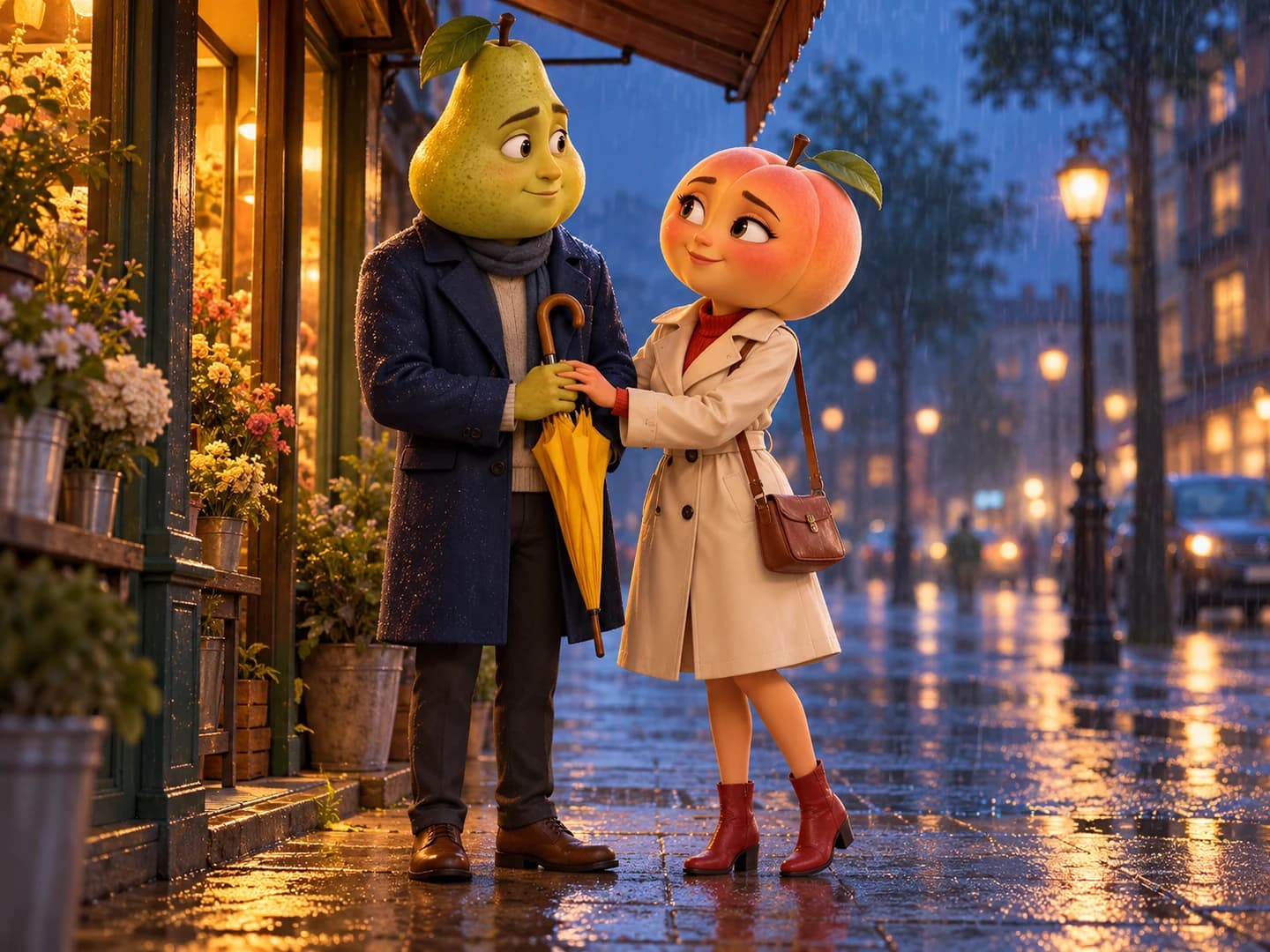
Two rivals have one umbrella and a long walk to the same audition.
Write a gentle fruit romance about a shy pear and a confident peach, rival street musicians caught in the rain outside an audition. They have one umbrella. In three scenes, show the pear giving it to the peach, the peach noticing he is getting soaked, and her choosing to wait beside him under a narrow awning. Let generosity start the relationship; neither character owes the other a date. Use two recurring anthropomorphic fruit characters with distinct clothing, a single street setting, and an ending shown through a gesture rather than a speech. Give an outline, a character appearance guide, and three single-scene video prompts. Keep each spoken line under eight words.
An anthropomorphic green pear in a navy coat stands beside an anthropomorphic peach in a cream raincoat under a shop awning. He offers her a closed yellow umbrella. She looks from the umbrella to his rain-soaked sleeve and gently pushes the umbrella back between them. One continuous medium two-shot, gentle rain, warm shop light, no dialogue or text.
Make it yours. Change the shared destination or the small sacrifice that reveals affection.
Watch for this in the result. Watch the handoff and the eyelines. If the umbrella changes hands several times, simplify the action to the pear offering it and the peach smiling.
Try this scene in the Video workspace — copy the video prompt above, then paste it into Prompt.
A perfectly normal weather report
The lemon promises a calm day. The studio has other plans.
Develop a fruit comedy about a very serious lemon weather presenter who refuses to acknowledge a giant watermelon rolling through the television studio. Build it in three beats: a confident forecast, one obvious background disaster, and a deadpan reaction. Use a lemon in a navy suit as the only speaking character. Keep everything in one studio, make the joke readable without text, and end on the lemon quietly straightening his tie. Give me a concise story, a character description, and a separate video prompt for each beat. Use only one short spoken line in the whole story. Do not add a second disaster or a narrator.
An anthropomorphic lemon in a navy suit sits behind a news desk. A large watermelon rolls slowly across the studio behind him. The lemon follows it with his eyes, faces the camera again, and straightens his tie. One continuous medium shot, bright studio lighting, soft rolling sound and paper rustle, no speech or on-screen text.
Make it yours. Swap the background disruption: a rolling watermelon, indoor snow, or a runaway fan. Pick one.
Watch for this in the result. The audience should notice the watermelon before the lemon reacts. Remove extra debris or camera movement if they hide that timing.
Try this scene in the Video workspace — copy the video prompt above, then paste it into Prompt.
Who took the golden seed?
The prize disappears, but the clue is growing in plain sight.
Write a compact fruit mystery set at a community greenhouse. A lemon detective investigates a missing golden seed. A banana is accused because he was last near the display, but a shy grape has planted it in a cracked pot to save a dying garden. Make the grape responsible for the theft while giving her an understandable motive. Plan four scenes: the empty display, a misleading clue, the discovery of a sprout, and a decision to return the prize and ask permission to grow it together. Give each character a stable appearance and each scene one visible clue or action. Provide a short outline and four video prompts. The ending must explain the original clue, not introduce a new culprit.
An anthropomorphic lemon detective in a tan coat kneels beside a cracked terracotta pot inside a greenhouse. He brushes loose soil from the rim and notices a single bright green sprout. He pauses, then looks toward the empty seed display behind him. One continuous close medium shot, soft morning light, quiet greenhouse ambience, no dialogue or text.
Make it yours. Change the missing object and the visible clue. Avoid a solution that relies on readable tiny text.
Watch for this in the result. Make the pot and sprout readable in the same shot. A clue that only exists in the written prompt will not help the viewer solve the mystery.
Try this scene in the Video workspace — copy the video prompt above, then paste it into Prompt.
The smallest employee, the biggest button
A grape gets the job. Reaching the equipment is another matter.
Create a harmless fruit workplace comedy about a tiny grape on his first day as a railway announcer. He is excellent at the job but cannot reach the giant microphone button. Build three scenes: he confidently takes his place, he unsuccessfully stretches for the button, and he calmly moves his chair closer and presses it with a pencil. Keep his purple grape head, complete humanlike body, and mustard vest consistent. The joke is the oversized workplace, not humiliation. Give an outline and three separate scene prompts, with one visible action per clip. Finish with a satisfied nod and no extra punchline. Avoid fast montage, falls, or long speech.
A tiny anthropomorphic purple grape in a mustard vest sits at a large station desk. He stretches one arm toward an oversized red microphone button just beyond his reach, pauses, and looks at a pencil beside him. One continuous wide shot that shows the size difference, bright morning light, quiet station ambience, no speech or text.
Make it yours. Choose one oversized object and one clever, visible solution.
Watch for this in the result. Keep both the grape and the button in frame. The size difference is the joke, so a close-up of only his face would lose the setup.
Try this scene in the Video workspace — copy the video prompt above, then paste it into Prompt.
The crooked lantern
The lantern looks wrong until the light goes on.
Write a warm fruit story about an orange preparing a lantern for a neighborhood festival. Her handmade lantern is crooked, and she hides it beside the perfectly round ones. A coconut friend asks to light it anyway. Its uneven paper casts a beautiful pattern on the wall, and the orange chooses to hang it where everyone can see. Use three scenes: comparison, encouragement, and the light reveal. Give the orange green overalls and the coconut a blue scarf throughout. Keep the friendship equal; the orange makes the final choice. Provide a short story, appearance notes, and three scene-level video prompts. Show the change through light, expressions, and actions, with little or no dialogue.
An anthropomorphic orange in green overalls holds a slightly crooked paper lantern in a dim courtyard. She switches on its small warm light. Irregular leaf-shaped shadows appear on the wall behind her, and she looks up in surprise. One continuous medium shot, steady camera, evening ambience, no speech or on-screen text.
Make it yours. Change the handmade object or the feature that turns a flaw into something memorable.
Watch for this in the result. The reveal needs a visible change in the light. If the model adds a complicated transformation, ask only for the lantern to illuminate and film her reaction separately.
Try this scene in the Video workspace — copy the video prompt above, then paste it into Prompt.
Have your own idea? Start with a small choice.
Use a situation you have felt: wanting to belong, trying to look confident, offering help, admitting a mistake. Replace the people with fruit characters, then decide what changes by the end. A strange character is a good opening; a choice gives you a story.
Help me develop an original short fruit story.
Main character: [fruit, personality, appearance]
They want: [one concrete thing]
But: [an obstacle or difficult choice]
Tone: [funny, romantic, dramatic, mysterious, or warm]
Ending: [a choice or consequence that resolves the opening problem]

First give me three short premises and ask which I prefer. After I choose, write a three-scene outline. Keep the cast to two characters and use one location per scene. Then give each character a reusable appearance description and turn each scene into a separate video prompt with one visible action, framing, and any essential sound. Keep dialogue short. Do not write a long episode before we agree on the premise.
Replace the bracketed fields before sending. When the assistant offers three premises, choose one and explain what you like. Ask it to revise the weak beat before it writes every scene. This keeps you in charge of the story and saves time on material you would discard.
A useful first outline is setup → complication → choice. In the umbrella story: the rivals are stuck in the rain; one offers the only umbrella; the other chooses to stay. Each beat changes the relationship and gives you something you can show.
Write a character card before making scene two
Repeat the details that make your cast recognizable: fruit type, silhouette, face, clothing, and one distinctive accessory. Keep temporary emotions out of the permanent appearance description. For the look in our gallery, describe fruit heads on complete, clothed humanlike bodies.
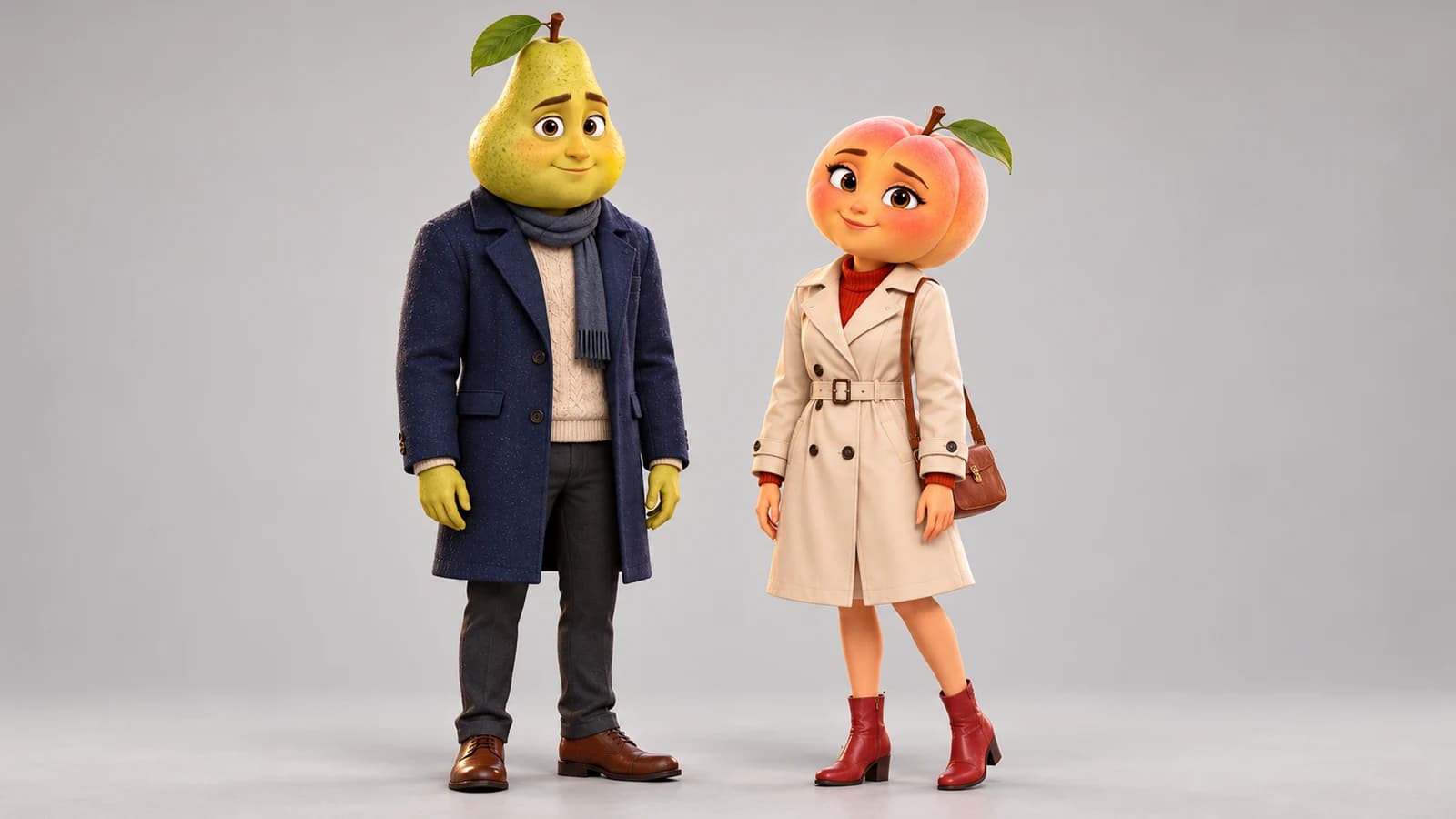
Style: expressive 3D fruit-headed adults with complete, clothed humanlike bodies, arms, hands, and legs.
Pear: a green pear-shaped head with a brown stem, one leaf, and an expressive face; navy knee-length coat, cream knit sweater, charcoal blue scarf, dark trousers, brown shoes, and green hands. Reserved but observant.
Peach: a fuzzy peach head with a pink blush, a short stem, one leaf, and an expressive face; belted cream raincoat over an orange knit collar, brown shoulder bag, red ankle boots, and peach-colored hands. Confident and kind.
Keep head shapes, facial design, clothing, accessories, and relative heights consistent in every scene. Change expressions and poses to match the action.
If your chosen video model supports image references, reuse an approved character image. If it uses a first frame, prepare the frame for that specific shot. Those inputs have different purposes; a generic reference is not automatically a locked first frame. Check the controls available in your tool.
Review the cast between scenes. A repeated description or reference can guide identity, but you still need to reject a clip where the pear changes outfit or the peach suddenly looks like an orange.
Revise what the audience can see
If a clip is disappointing, name the visible problem before rewriting the whole story. Keep the premise and fix one instruction.
- “She feels betrayed” is invisible. Try “She lowers the invitation, pushes away the second cup, and looks at the empty chair.”
- The scene rushes through the plot. Film the discovery first. Make the confrontation a separate clip.
- The dialogue sounds rushed. Keep the line that changes the scene and remove the explanation around it. A reaction can carry the rest.
- The gag is missing. Frame the character and the object together. The grape’s struggle needs the button in view.
- The screen text is wrong. Add important letters, phone messages, and captions in an editor where you can control the exact wording.
These are prompt revisions to try, not a promise that every model will follow every instruction. The useful question is whether the next take makes the story easier to understand.
Choose one scene and make it move
Take the scene prompt that interests you most. Open an AI video tool, paste it, choose a short duration, and generate one take. Watch it once for the action and once for the character’s reaction. Save the clip if the moment works; change one thing if it does not.
In our Video workspace, you can use the visible prompt and supported reference inputs. Story Workshop helps prepare a writing brief for ChatGPT or Claude. If you prefer a guided multi-scene workflow, the aicut tutorial below shows its own fruit-story process.
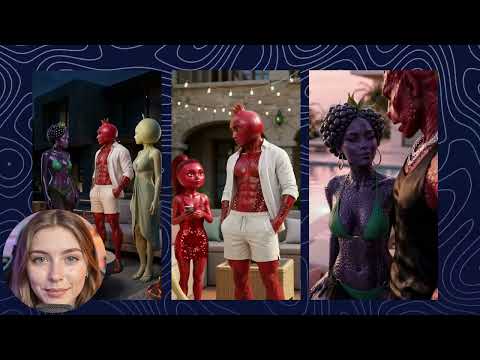
The creator’s published chapters cover series selection, cast and prompts, character images, format, and rendering. The word “viral” is part of their title; the practical task here is making a clear story you enjoy. You choose whether and where to publish it.
Your first assignment: make one character do one thing that reveals how they feel. A blueberry looking at an empty chair is enough to begin.
For settings, reviewing, downloading, and joining scenes, continue with How to make AI fruit videos. For a more dramatic direction, explore the fruit drama workspace.